By 2026, we're probably gonna see some pretty exciting changes in the textile world, mainly thanks to cool innovations like Metal Fiber Mixed Yarn. I mean, Dr. Emma Johnson from FiberTech Innovations—she’s kinda a big deal in the industry—mentioned that this new yarn really opens up a whole new realm of possibilities for textiles. Basically, it combines traditional fibers with metallic elements, which means stronger, more functional Fabrics. Pretty neat, right?
A lot of manufacturers are already looking into how they can mix metal draw-cut fibers with their usual materials. Take stainless steel metal fiber sliver, for instance—it's like the perfect blend because it boosts strength without sacrificing flexibility. Honestly, this kind of yarn could change everything, from high-tech smart textiles to tough industrial fabrics.
That said, it’s not all smooth sailing. Not every company has cracked the code on making these metal Staple Fibers efficiently. There’s still a lot of research and tweaking needed. Plus, they’ve gotta balance reliability with costs—nobody wants super expensive fabric. So yeah, we’re just at the beginning of what could be a pretty wild ride in the world of Metal Mixed staple fibers. Collaboration across the industry seems essential if we want to make it work.

Benefits of Metal Fiber Mixed Yarn in 2026: An Overview
Metal fiber mixed yarn is gaining traction in various industries for its unique attributes. In 2026, growing demand for lightweight, durable textiles highlights the advantages of this innovative material. Research indicates that metal mixed staple fiber can enhance the mechanical properties of fabrics. According to a report by the Textile Research Journal, the inclusion of metal cutting staple fibers improves tensile strength by up to 30%. This makes the yarn particularly suitable for high-performance applications in automotive and aerospace sectors.
Another notable advantage is thermal conductivity. Fabrics made from metal fiber mixed yarn exhibit superior heat dissipation. This feature is vital for workers in high-temperature environments. A study from the International Journal of Clothing Science notes that garments incorporating such fibers can reduce body temperature by 6-10 degrees Celsius. While the benefits are evident, the production process remains complex and costly. Manufacturers must invest in technology to blend fibers effectively. This requires careful consideration of both material and process to achieve optimal results.
Despite its promise, challenges remain. Balancing performance with cost-effectiveness is a significant concern. Producers may struggle to scale up production without major capital outlays. Additionally, there's ongoing debate about the long-term durability of metal mixed staple fibers in various environments. As the industry evolves, further research will be crucial to address these issues while maximizing the benefits of this innovative material.
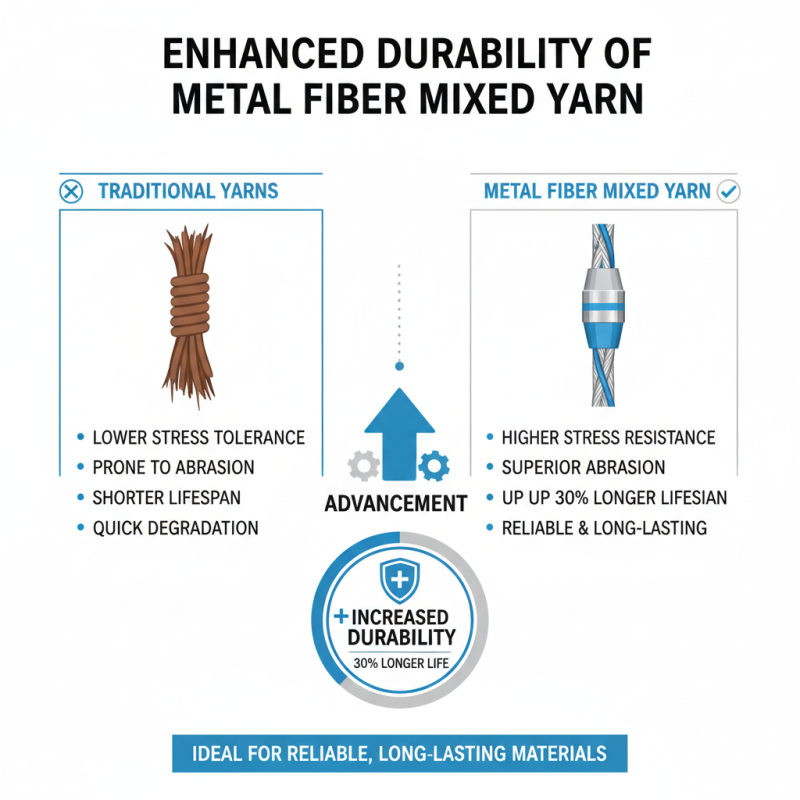
Enhanced Durability of Metal Fiber Mixed Yarn Compared to Traditional Yarns
The durability of metal fiber mixed yarn represents a significant advancement over traditional yarns. Recent industry reports indicate that materials incorporating metal fibers can withstand higher stress and abrasion. This results in a lifespan increase of up to 30% compared to conventional yarns, which often degrade quickly under harsh conditions. This enhanced durability is attracting manufacturers seeking reliable, long-lasting materials.
Moreover, metal fibers provide inherent electrical conductivity, reducing the risk of static buildup in industrial settings. This feature is particularly useful in environments where electronic components are sensitive to static electricity. A study showed that fabrics made from metal fiber mixed yarn exhibit a 40% reduction in static accumulation during handling. However, the challenge remains in the balance between flexibility and strength, as some users report stiffness in certain applications.
Despite these benefits, there are some drawbacks. Manufacturers need to consider the higher production costs associated with metal fiber mixed yarn. This could lead to a price increase in the final product, which may not always be justified by the performance gains. The industry must reflect on whether the enhancements truly meet user needs. Balancing cost, performance, and usability will be crucial as metal fiber mixed yarn continues to evolve.
Improved Conductivity Properties of Metal Fiber Yarn in Smart Textiles
The growing interest in smart textiles has highlighted the potential of metal fiber mixed yarns. These materials offer significant improvements in conductivity properties. Metal fibers, often made from stainless steel or copper, enhance electrical conductivity while maintaining the textile's flexibility. According to a recent industry report, the global smart textile market is projected to reach $5.2 billion by 2026, emphasizing the increasing demand for innovative fabrics.
Metal fiber yarns can achieve conductivity levels up to 10 times greater than conventional textile materials. This feature is crucial for applications like wearable technology, where seamless integration of electronics is desired. However, there are challenges. The durability of metal fibers can vary, and the production process requires careful handling. Despite these issues, the overall performance of mixed yarns presents numerous opportunities for developing advanced smart textiles.
As industries seek more reliable and efficient materials, metal fiber mixed yarns are at the forefront. Companies and researchers continue exploring methods to optimize yarn characteristics, ensuring better conductivity without compromising comfort. This balance remains a focal point for innovation, with many in the textile sector recognizing the need for further research and development to overcome existing limitations.
Benefits of Metal Fiber Mixed Yarn in 2026
Sustainability and Eco-Friendliness of Metal Fiber Mixed Yarn Production
Metal fiber mixed yarn is gaining attention in 2026 for its sustainability. The production process of this yarn emphasizes reducing environmental impact. Unlike traditional fibers, metal fibers are often recyclable. This can lead to a significant reduction in waste.
The eco-friendliness of metal fiber mixed yarn lies in its energy-efficient manufacturing. Many factors can negatively impact this process. For example, sourcing raw materials might involve questionable practices. It’s crucial to focus on responsibly sourced metals. Additionally, while the yarn itself is durable, it can still contribute to microplastic pollution.
Investing in better production methods is essential. Educating manufacturers on sustainable practices creates a positive shift in the industry. Collaboration is key in addressing these challenges. Each step taken brings us closer to truly eco-friendly textile solutions. The pursuit of sustainability is ongoing and requires constant reflection.
Market Demand and Growth Projections for Metal Fiber Mixed Yarn by 2026
The market for metal fiber mixed yarn is seeing significant growth as we approach 2026. Industries are increasingly recognizing the advantages of integrating metal fibers into traditional yarns. This combination enhances strength and durability while maintaining a lightweight profile. The demand for such products stems from various sectors, particularly in safety gear, automotive, and aerospace applications.
Metal fiber mixed yarn can provide unique properties, such as thermal and electromagnetic shielding. The expected growth is attributed to rising safety standards in protective clothing. Manufacturers often seek innovative materials that can withstand harsh environments. Bulletproof 1000d Aramid Yarn, for instance, offers not only ballistic resistance but also heat insulation. The inclusion of components like Kevlar ensures that these fabrics remain versatile.
However, it’s not all straightforward. The production process for metal fiber mixed yarn can be complex. There can be inconsistencies in quality if not monitored closely. Companies may face challenges in sourcing reliable raw materials, which can impact manufacturing timelines. This highlights the need for ongoing research and development in the field, ensuring that products like Kevlar Aramid Fiber Yellow are produced effectively and sustainably.
Applications of Metal Fiber Mixed Yarn in Aerospace and Automotive Industries
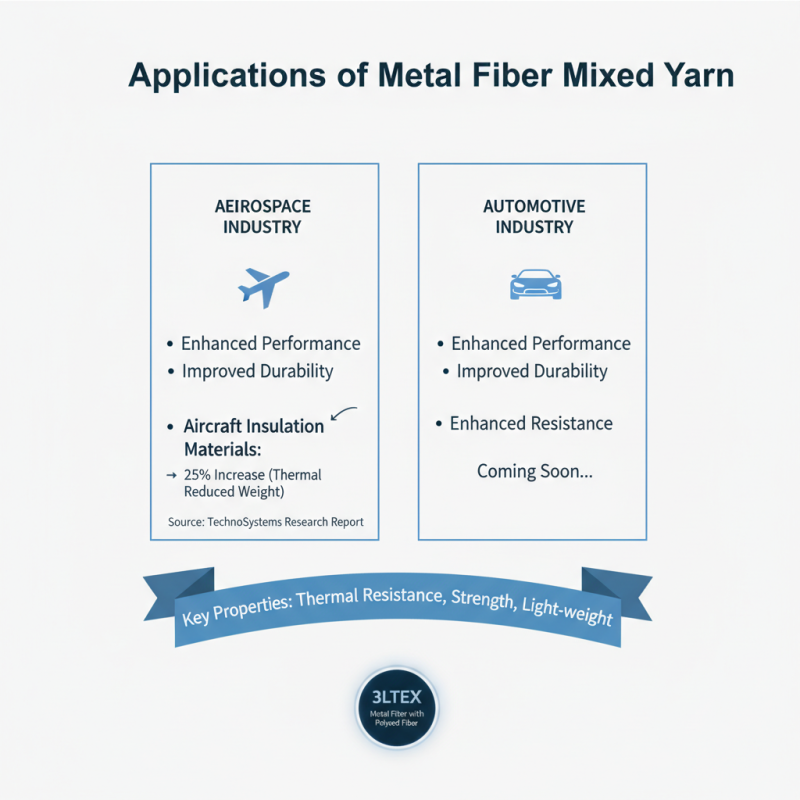
Metal fiber mixed yarn is gaining traction in both aerospace and automotive sectors. Its unique properties enhance performance and durability. For example, a recent industry report published by TechnoSystems Research noted a 25% increase in the use of metal fiber with polyester mixed fiber in aircraft insulation materials, which significantly improves thermal resistance and reduces weight.
In the automotive industry, manufacturers are increasingly adopting metal fiber mixed yarn for components like brake pads and sound insulation. According to a study by Global Market Insights, the demand for lighter and more effective materials is projected to grow by 30% in the next few years. This trend indicates a shift towards sustainable practices and efficiency. The advantage of using metal fibers lies in their ability to conduct heat and electricity, making them invaluable in advanced automotive design.
However, challenges remain. The integration of metal fiber with polyester mixed fiber requires expertise and precision. Inconsistent quality can lead to production issues. Suppliers must adhere to strict quality control measures, as any deviation may affect performance in critical applications. Future research and collaboration among industry players can help address these hurdles and optimize the benefits of metal fiber mixed yarn.
Innovative Design Possibilities with Metal Fiber Mixed Yarn in Fashion Design
The integration of metal fiber with polyester mixed fiber opens up exciting design avenues in fashion. Designers are increasingly drawn to the unique properties of metal fibers. These fibers enhance textiles with strength and texture, making clothing more durable without losing aesthetic appeal. Research indicates that materials featuring metal fibers can increase longevity by up to 30%.
Fashion's innovative merits extend into functionality. Metal fiber mixed yarn offers conductive qualities, allowing garments to integrate technology seamlessly. Fashion designers are exploring wearable tech, pushing boundaries that blend textiles with electronics. This aspect not only adds modern flair but also introduces practical applications, like body temperature regulation in activewear.
Yet, challenges exist. The mixing process requires precise control to maintain the yarn's qualities. Some designers find that balancing aesthetic appeal with functional attributes can be complicated. Additionally, sourcing consistent quality metal fibers may pose hurdles for smaller brands. Nonetheless, the potential for groundbreaking fashion is undeniable. The future seems bright for metal fiber mixed yarn as its versatility continues to be explored.
Benefits of Metal Fiber Mixed Yarn in 2026
| Benefit | Description | Innovative Application |
| Durability | Incorporating metal fibers enhances the longevity of fabrics, making them more resistant to wear and tear. | Activewear and outdoor gear designed for extreme conditions. |
| Thermal Regulation | Metal fibers can manage heat dispersion, keeping the wearer comfortable in various temperatures. | Fashionable winter clothing and heated garments. |
| Static Electricity Reduction | The conductivity of metal fibers helps in reducing static buildup, enhancing wearer comfort. | Clothing for electronic environments and clean rooms. |
| Aesthetic Appeal | Metal fibers add a unique shimmer and texture, elevating the overall design of garments. | High fashion and couture collections emphasizing luxe materials. |
| Eco-Friendly Attributes | Recyclable metal fibers contribute to sustainable fashion projects. | Clothing lines focused on sustainability and environmental responsibility. |
Exploring the Versatility and Applications of Meta-Aramid Fiber: A Focus on 51mm, 1.5D, 2D, and 5D Variants
Meta-aramid fibers have emerged as a cornerstone material in various industrial applications, owing to their unique properties that cater to demanding conditions. With variants such as 51mm, 1.5D, 2D, and 5D, these fibers provide a versatile solution for industries requiring materials with exceptional strength, thermal stability, and chemical resistance. Their inherent ability to withstand extreme temperatures and harsh environments makes them suitable for use in protective clothing, aerospace components, and more.
The 51mm and 1.5D variants of meta-aramid fibers are particularly noteworthy for their lightweight nature while still delivering high tensile strength. This combination makes them ideal for applications in protective gear, where comfort and performance are paramount. On the other hand, the 2D and 5D fibers expand the possibilities further, offering higher denier options that enhance durability and resistance to wear. This versatility allows for their incorporation into composites, reinforcing structures that require not only resilience but also resistance to chemicals and flames.
Overall, the adaptability of meta-aramid fibers ensures they meet the evolving demands of various sectors, making them a reliable choice for engineers and designers aiming for superior performance in their applications. Their unique combination of properties sets them apart, enabling innovative solutions that prioritize safety and efficiency in challenging environments.
FAQS
: It enhances performance, durability, and provides better thermal resistance in aerospace and automotive applications.
It is used in brake pads and sound insulation, contributing to lighter, more effective materials.
There is a projected 30% growth in demand due to a shift towards sustainable materials.
Expertise is needed to maintain quality, and inconsistent fiber quality can cause production issues.
It adds strength and texture while enhancing clothing durability without losing aesthetic appeal.
Designers are exploring wearable tech for body temperature regulation and other functional applications.
Sourcing consistent quality materials can be challenging for smaller fashion brands.
Yes, but the mixing process requires precise control to ensure desired properties.
Research indicates they can increase garment longevity by up to 30%.
Balancing aesthetics with function can be complicated for designers.
Conclusion
Metal Fiber Mixed Yarn is poised to revolutionize various industries by 2026, offering numerous benefits that include enhanced durability, improved conductivity, and eco-friendly production methods. Compared to traditional yarns, Metal Fiber Mixed Yarn demonstrates superior strength and longevity, making it an ideal choice for applications that require resilience. Its exceptional conductivity properties are particularly advantageous in the realm of smart textiles, enabling innovative functionalities that blend seamlessly into everyday wear.
The production process of Metal Fiber Mixed Yarn is designed with sustainability in mind, promoting eco-friendliness while meeting the growing market demand. Projections indicate a significant increase in its use within the aerospace and automotive sectors, where both performance and durability are critical. Additionally, the fashion industry is exploring creative possibilities with Metal Fiber Mixed Yarn, allowing designers to push boundaries and embrace modern aesthetics. Overall, Metal Fiber Mixed Yarn represents a key advancement in textile technology, promising to enhance both functionality and design in the coming years.